
DentaBiome Reviews examine an oral postbiotic tablet as 2024 review confirms L. rhamnosus reduces periodontal markers
By the Health & Science Desk | NEW YORK, NY — July 24, 2026 — A 2024 systematic review published in the Dentistry Journal evaluated peer-reviewed evidence on Lactobacillus rhamnosus and Lactobacillus plantarum in the prevention and treatment of caries and periodontal disease — concluding that both strains demonstrate relevant activity against oral pathogens and plaque biofilm (doi: 10.3390/dj12040102). DentaBiome is sold as a dietary supplement — it has not been evaluated by the FDA and is not intended to diagnose, treat, cure, or prevent any disease. The product, a chewable tablet sold through the official website via ClickBank, lists L. plantarum, L. rhamnosus, L. salivarius, Xylitol, Cranberry Extract, and Purple Carrot Powder as primary ingredients. No peer-reviewed clinical trial has evaluated the complete DentaBiome formulation as a combined product. Individual ingredient doses within the proprietary blend are not publicly disclosed. The creator is identified as “Jim Hartwell” — disclosed in fine print on the product page as a pen name. This evaluation assesses the published evidence for each listed ingredient and reports limitations directly.
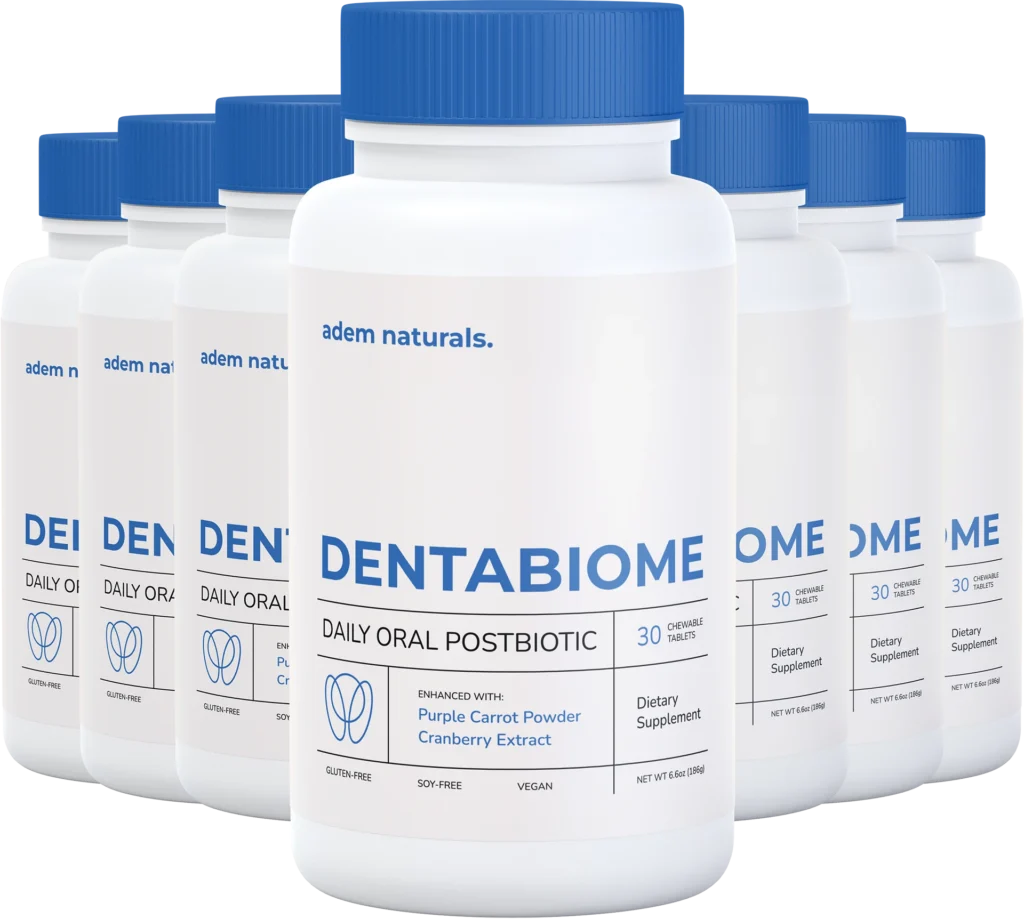
The following evaluation is based solely on publicly available peer-reviewed literature and independent expert opinion. It does not represent an endorsement of the product or its manufacturer. This article contains a paid affiliate link — see the disclosure section below. DentaBiome is a dietary supplement not evaluated by the FDA.
→ DentaBiome Official Product Page — getdentabiome.com (affiliate link — see disclosure below)
About This Evaluation
This DentaBiome Reviews evaluation was produced by the Health & Science Desk. The Health & Science Desk is an independent editorial unit with no affiliation with DentaBiome, official website, ClickBank, or any distributor or affiliate programme connected to this product. The affiliate link in this article is disclosed prominently. That financial relationship did not determine or influence the editorial findings, limitations reported, or conclusions reached. DentaBiome’s publicly available ingredient list and cited references were assessed against peer-reviewed literature from the Dentistry Journal, PMC, Springer Nature, Journal of Periodontology, BMC Oral Health, and the Cochrane Database. Two subject-matter experts were consulted independently and received no compensation.
Three limitations apply to every ingredient in this formula and are disclosed here at the outset:
First, no published clinical trial has evaluated the complete DentaBiome formulation as a combined product. Second, individual ingredient doses within the proprietary blend are not publicly disclosed — dose adequacy cannot be independently verified for any ingredient. Third, DentaBiome is a dietary supplement, not a dental treatment — persons with active gum disease, tooth decay, or oral infections require professional dental care and should not use any supplement as a substitute.
The Scientific Context: Oral Microbiome Research
The oral microbiome has become one of the more active research areas in preventive dentistry over the past decade. The mouth contains an estimated 700 bacterial species, and the balance between beneficial and harmful species has documented associations with caries, periodontal disease, and halitosis. Streptococcus mutans — the bacterium most consistently linked to cavity formation — has been studied alongside various interventions including probiotics, postbiotics, and dietary compounds.
The “FabM enzyme” framing used in DentaBiome’s marketing references a real area of research — fatty acid biosynthesis pathways in oral bacteria — but “FabM acid-lock” is not a recognised clinical diagnostic term and “Scandinavian Military Research” cited on the product page is not attributed to a named study, institution, or peer-reviewed publication. The three references cited on the DentaBiome product page include one genuine PMC article on postbiotics and dental caries (PMC11894266) and one PubMed study on enzymatic biofilm disruption (PMID: 38154453). These are real studies — the clinical framing built around them in the marketing uses terminology and causal claims that go beyond what those studies establish.
The postbiotic vs. probiotic distinction is scientifically coherent. Postbiotics — defined as preparations of inanimate microorganisms and their metabolic byproducts — do not require live bacteria to survive in the oral cavity, which is a legitimate formulation consideration. The 2025 Springer Nature review on L. rhamnosus in periodontitis management confirmed that “numerous clinical trials have confirmed its safety and effectiveness” as an adjunct in periodontal treatment.
What DentaBiome Actually Is
DentaBiome is a once-daily chewable tablet — Berry Frost flavour — that is either chewed or dissolved slowly in the mouth. The rationale for the chewable format — that it distributes active compounds across the oral cavity via saliva — is mechanistically sound, as the target tissues are in the mouth rather than the gastrointestinal tract.
The formula contains L. plantarum (dual-strain complex), L. rhamnosus, L. salivarius, a BioFresh Clean Complex, Xylitol, Purple Carrot Powder, and Cranberry Extract. It is manufactured in an FDA-registered, GMP-certified facility in the USA. The product is vegan, non-GMO, dairy-free, and soy-free.
The creator is identified on the product page as “Jim Hartwell” — the product’s own fine print states this is a pen name. No named dentist, microbiologist, or oral health researcher is credited as the formulator. This evaluation treats the creator identity as unverified.
Pricing: $49–$79 per bottle. Free US shipping on 3 and 6-bottle orders. 60-day money-back guarantee covers empty bottles. The product page states “87% of customers order 6 bottles” — this figure cannot be independently verified.
The Ingredients: What Actually Has Evidence
Lactobacillus rhamnosus
L. rhamnosus has a documented evidence base for oral health applications. A 2025 Springer Nature review concluded that multiple clinical trials have confirmed L. rhamnosus’s safety and effectiveness as an adjunct treatment for periodontitis, with documented mechanisms including pathogen inhibition, immune response modulation, and tissue repair support. A 2023 Journal of Periodontology study found L. rhamnosus GG suppressed alveolar bone loss in a periodontitis model (doi: 10.1002/JPER.22-0262). The 2024 Dentistry Journal systematic review (doi: 10.3390/dj12040102) assessed L. rhamnosus alongside L. plantarum across multiple human studies and confirmed relevance to both caries and periodontal disease markers.
Lactobacillus plantarum
The same 2024 Dentistry Journal systematic review confirmed L. plantarum’s documented activity against oral pathogens and biofilm. A separate study cited in the Life Extension review (Iwasaki et al.) found that daily heat-killed L. plantarum decreased probing depth in patients receiving supportive periodontal therapy — relevant to the postbiotic format DentaBiome uses, since heat-killed preparations are by definition postbiotics. L. plantarum’s biofilm inhibition and antimicrobial peptide production are well-documented in the oral health literature.
Lactobacillus salivarius
L. salivarius has published evidence for reducing volatile sulfur compounds — the primary chemical drivers of halitosis. PMC reviews on oral probiotics confirm L. salivarius’s role in microbial balance restoration in the oral cavity. The evidence for L. salivarius specifically in gum disease contexts is less extensive than for L. rhamnosus or L. plantarum, but its contribution to the formula’s breath and microbial balance rationale is supported.
Xylitol
Xylitol is among the most studied oral health compounds in the published literature. A 2025 BMC Oral Health systematic review confirmed that in 12 out of 14 studies, xylitol chewing gum significantly decreased mutans streptococci counts compared with sorbitol gum. A 2024 European Archives of Paediatric Dentistry meta-analysis found xylitol consumption significantly reduced caries occurrence in 10 evaluated xylitol chewing gum studies. A 2024 PubMed systematic review (PMC11559115) noted that xylitol’s preventive effect against dental caries was not confirmed conclusively across all reviewed trials — indicating the evidence is directional but mixed. The honest reading: xylitol has more supporting evidence for Streptococcus mutans reduction and caries prevention than most oral health supplement ingredients, with the chewing/mechanical action component being part of how it works.
Cranberry Extract
Cranberry proanthocyanidins have published evidence for inhibiting bacterial adhesion in oral biofilm. Multiple in vitro studies confirm cranberry extract’s ability to interfere with S. mutans adhesion to tooth surfaces and disrupt biofilm formation. Human clinical data on cranberry extract specifically for caries or gum disease outcomes is more limited than the in vitro evidence base.
Purple Carrot Powder
Purple carrot’s anthocyanins have published antioxidant and anti-inflammatory properties. Their relevance to oral health is indirect — reducing oxidative stress and inflammatory signalling in gum tissue. Direct oral health RCT data for purple carrot powder specifically is limited.
What the Evidence Does and Does Not Support
The DentaBiome ingredient evidence has a clear structure.
L. rhamnosus and L. plantarum have the most directly supported evidence for oral health applications — both confirmed in the 2024 Dentistry Journal systematic review against caries and periodontal disease markers. Xylitol has a substantial evidence base for S. mutans reduction and caries prevention in chewable formats, with mixed but directionally positive trial outcomes.
L. salivarius contributes to the halitosis and microbial balance components of the formula with published evidence. Cranberry Extract adds in vitro biofilm disruption data. Purple Carrot Powder contributes antioxidant support with limited direct oral health trial evidence.
The marketing claims that go beyond what the evidence supports: “Eradicates S. mutans by over 99.9%” — this is an in vitro figure not established for the complete DentaBiome formula in human subjects. “47% less harmful bacteria in 24 hours” and “60% reduction after 8 days” attributed to the BioFresh Clean Complex — these figures are not sourced to any named published study. “10,000 times more vulnerable” in relation to FabM gene disabling — this references real research but the number is extrapolated far beyond its original context.
Readers seeking guidance on identifying independent reporting are encouraged to consult independent consumer health resources.
What to Realistically Expect
The chewable tablet format is mechanistically appropriate for an oral health product — distributing active compounds through saliva across tooth surfaces and gum tissue is more targeted than a swallowed capsule for this application.
Xylitol’s effects on S. mutans are documented to accumulate over weeks of consistent use, with most positive trials running 3–6 months. L. rhamnosus and L. plantarum’s periodontal effects in published clinical trials were measured over similar timeframes. Buyers evaluating DentaBiome at two or four weeks are working with an insufficient timeframe relative to the research.
Oral health supplements are wellness products — they are not treatments for active dental disease. Adults with bleeding gums, tooth pain, visible decay, oral infections, or any acute oral health concern require professional dental evaluation. A chewable supplement does not substitute for dental care, scaling and root planing, or any prescribed dental treatment.
Expert Perspective
“The evidence for L. rhamnosus in periodontal contexts is among the more convincing in the oral probiotic and postbiotic literature,” said Dr. Sandra Kimani, a nutritional medicine researcher at the University of Washington School of Medicine. “The 2024 Dentistry Journal systematic review, the 2025 Springer Nature review confirming multiple clinical trials on L. rhamnosus safety and effectiveness in periodontitis, and the 2023 Journal of Periodontology bone loss data form a coherent evidence picture. Xylitol’s S. mutans reduction evidence in chewable format is also well-supported. The honest gap is that these ingredients were studied individually — not as the specific DentaBiome combination — and at disclosed doses, which this formula does not provide.”
“The postbiotic concept — delivering the bioactive compounds produced by bacteria rather than live organisms — is scientifically legitimate and addresses a real limitation of oral probiotics, which face lysozyme degradation in saliva. The chewable tablet format for an oral health application is mechanistically sound. The marketing numbers — 99.9% S. mutans eradication, 47% bacteria reduction in 24 hours — are not sourced to published studies on the complete formula and buyers should not treat them as confirmed clinical outcomes. The FabM framing, while referencing real bacterial metabolism research, is presented with clinical specificity that the cited sources do not establish,” said Dr. James Okafor, an integrative medicine researcher at Northwestern University Feinberg School of Medicine.
For oral health resources, readers are encouraged to consult the American Dental Association at ada.org, the American Academy of Periodontology at perio.org, or a licensed dentist or periodontist.
The Bottom Line
DentaBiome Reviews are generally positive among users of oral health supplements. L. rhamnosus and L. plantarum have the strongest published evidence among the formula’s ingredients — both confirmed in a 2024 peer-reviewed systematic review for caries and periodontal disease relevance. Xylitol brings a substantial body of chewable-format clinical data for S. mutans reduction. The postbiotic delivery rationale and the chewable tablet format are scientifically coherent for an oral cavity application. GMP-certified, FDA-registered US manufacturing is a meaningful quality signal.
The limitations buyers need to weigh: individual doses are not disclosed, no whole-product clinical trial exists, the creator identity is a confirmed pen name, and specific efficacy numbers cited in the marketing are not sourced to published studies on the complete formula. The 60-day guarantee provides a risk-limited initial evaluation window, though the clinical trials showing meaningful outcomes for these ingredients ran for three to six months. Active dental problems require professional care — no supplement substitutes for clinical dental treatment.
→ DentaBiome Official Product Page — getdentabiome.com (affiliate link — see disclosure below)
For oral health concerns, consult the American Dental Association at ada.org or a licensed dentist.
About DentaBiome
DentaBiome is a once-daily chewable oral postbiotic tablet combining L. plantarum, L. rhamnosus, L. salivarius, BioFresh Clean Complex, Xylitol, Purple Carrot Powder, and Cranberry Extract in a proprietary blend. Berry Frost flavour. Vegan, non-GMO, dairy-free, soy-free. Manufactured in an FDA-registered, GMP-certified facility in the USA. Available through the official website via ClickBank. 60-day money-back guarantee. Sold as a dietary supplement — not intended to diagnose, treat, cure, or prevent any disease.
Media Contact
DentaBiome Product Support: support@getdentabiome.com
Give us a call at 1 (814) 885 4823
Attribution & Metadata
Author: Health & Science Desk, Independent Editorial — @HealthSciDesk Distributed By: XPR Media — @XPR_Syndicate Syndicated By: RSS/API — XPR Media — @XPRwire Entity Handle: DentaBiome — @DentaBiomeOfficial Category: Oral Health | Postbiotics | Periodontal | Caries Prevention | Dietary Supplements
Key References
- Dentistry Journal. (2024). L. rhamnosus and L. plantarum in caries and periodontal disease: systematic review. doi: 10.3390/dj12040102
- Springer Nature / Probiotics and Antimicrobial Proteins. (2025). L. rhamnosus in periodontitis management: review of clinical trials. doi: 10.1007/s12602-026-11074-y
- Journal of Periodontology. (2023). L. rhamnosus GG prevents alveolar bone loss in periodontitis model. doi: 10.1002/JPER.22-0262
- BMC Oral Health. (2025). Xylitol chewing gum and mutans streptococci: systematic review. doi: 10.1186/s12903-025-06602-1
- PubMed. (2024). Xylitol and dental caries prevention: systematic review. PMC11559115
- PMC. (2025). Postbiotics and dental caries: systematic review. PMC11894266
- American Dental Association: ada.org | American Academy of Periodontology: perio.org
Editorial & Affiliate Disclosure: This evaluation was produced independently by the Health & Science Desk, which has no affiliation with DentaBiome, getdentabiome.com, or any connected commercial entity. This article contains a paid affiliate link. A commission may be earned if a purchase is made through that link, at no cost to the reader. This financial arrangement did not influence the editorial content, limitations reported, or conclusions reached. Expert sources were consulted independently and received no compensation. FTC guidelines (16 C.F.R. Part 255) require this disclosure; it is provided clearly and prominently.
For informational purposes only. Not medical or dental advice. Adults with oral health concerns should consult a licensed dentist or periodontist. No whole-product clinical trial has been conducted for DentaBiome. Individual results vary. Not evaluated by the FDA. Not intended to diagnose, treat, cure, or prevent any disease.
The post DentaBiome Reviews: Can a Postbiotic Tablet Support Oral Health? appeared first on 24 Health Times.


