
Key Takeaways
- Dye-free hybrid waxes combine synthetic polymers with natural carnauba to deliver a deeper shine and longer-lasting protection than either ingredient alone
- Patent filings on spray wax composition explain that nanometer-sized wax particles in dye-free formulas let light pass through cleanly instead of bouncing off dye pigment, which is why streaking and haze fade away
- Ceramic and PTFE additives found in many hybrid waxes create a chemical bond with paint that can hold up for a year or more of protection
- A weekly wipe-down habit, applied to a cool surface with a clean microfiber towel, is one of the simplest ways to sustain gloss between full detail sessions
Getting a car to look like it just rolled off the showroom floor comes down to chemistry as much as elbow grease. Car enthusiasts and everyday drivers alike are finding that the products delivering the deepest gloss and the longest protection share a common trait: they skip dyes and blend synthetic polymers with natural wax.
That combination, known as dye-free hybrid wax, is quickly becoming the standard people point to when someone asks how to get a genuinely brilliant, streak-free finish.
What Stops Haze and Streaking
Haze and streaking usually trace back to one culprit: the dye pigment mixed into many traditional waxes. Those pigments are added purely for visual effect while the product sits in the bottle, but once applied, they can leave a faint film or uneven residue that catches light the wrong way, especially on dark paint colors. Dye-free formulas remove that variable entirely, letting the actual protective ingredients do the work without a colored additive muddying the surface.
Patent filings describing dye-free spray wax composition explain why: nanometer-sized wax particles don’t reflect light the way larger, pigmented particles do, so light passes through the coating instead of bouncing off unevenly. The result is a transparent layer that looks clean rather than cloudy, and one that resists the swirl marks and hazing that frustrate anyone chasing a mirror-like finish.
What Makes a Wax Truly Hybrid
A hybrid wax earns its name by pairing two very different worlds of chemistry, and understanding that pairing helps explain why these products perform the way they do on both showroom trailer queens and daily-driven trucks.
Synthetic Polymers Meet Natural Carnauba
Natural carnauba wax has long been prized for the warm, deep shine it produces, the kind of glow that made “show car wax” a category of its own. The trade-off has always been durability. Detailing trade coverage explains that hybrid waxes are typically built on a synthetic polymer base and then enriched with natural elements like carnauba, giving the finished product the visual depth associated with carnauba without sacrificing the staying power that synthetic chemistry provides.
These blends also tend to deliver a glossier finish than pure synthetic wax while lasting longer than natural carnauba alone, performing consistently across a range of climates and temperatures.
How Ceramic and PTFE Additives Add Durability
Many modern hybrid formulas go a step further by folding in advanced synthetic additives such as SiO2 (silicon dioxide, often called ceramic), graphene, or PTFE, the same slick polymer familiar from non-stick cookware. These additives are what push a wax from “nice shine for a few weeks” into genuinely long-haul protection. Detailers point to a few reasons these additives extend protection:
- Ceramic-infused hybrids chemically bond to the paint surface, improving adhesion compared with a wax that simply sits on top
- That stronger bond lets some ceramic-infused waxes claim a year or more of protection, well beyond what traditional carnauba-only waxes offer
- PTFE and graphene additives boost hydrophobic performance, so water beads tighter and rolls off faster, taking road grime with it
The Science Behind a Streak-Free Shine, as Revealed by Patents
The patent filings around dye-free spray wax composition cited earlier also offer a more technical explanation for why these products behave the way they do on paint. A transparent, dye-free coating lets the wax fill and protect without interfering with how the eye perceives the paint underneath.
How Nanoparticles Affect Light Reflection
The nanoparticle technology at the heart of dye-free hybrid waxes does double duty. Because the particles are small enough to avoid scattering light the way dye pigments do, the coating stays visually invisible rather than adding its own tint or haze. That same small particle size also lets the wax penetrate and fill tiny cracks and crevices in the clear coat, smoothing out microscopic imperfections that would otherwise catch light unevenly. Together, these two effects produce a transparent, streak-free finish that also holds up to closer inspection under direct sunlight.
Getting the Most From Your Routine, Per Product Guidelines
Even the best-formulated hybrid wax depends on correct application, and product guidance for detail sprays points to a few habits that separate a flawless finish from a streaky one.
Where It’s Safe to Apply, Per Product Guidelines
Hybrid waxes are versatile, but versatile doesn’t mean universal. Most formulas are safe for clear-coat paint, gloss plastics, powder-coated wheels, and trim, making them suitable for tires, rims, and painted body panels in a single pass. Yet, there are still surfaces to avoid: matte finishes without a hidden-spot test first, raw aluminum without testing, brake components, and any panel that’s still hot from sun exposure or driving. Testing a small, hidden area before committing to a full panel is a habit worth building into any detailing routine, hybrid wax or otherwise.
Why a Weekly Habit Sustains Gloss, Per Product Guidelines
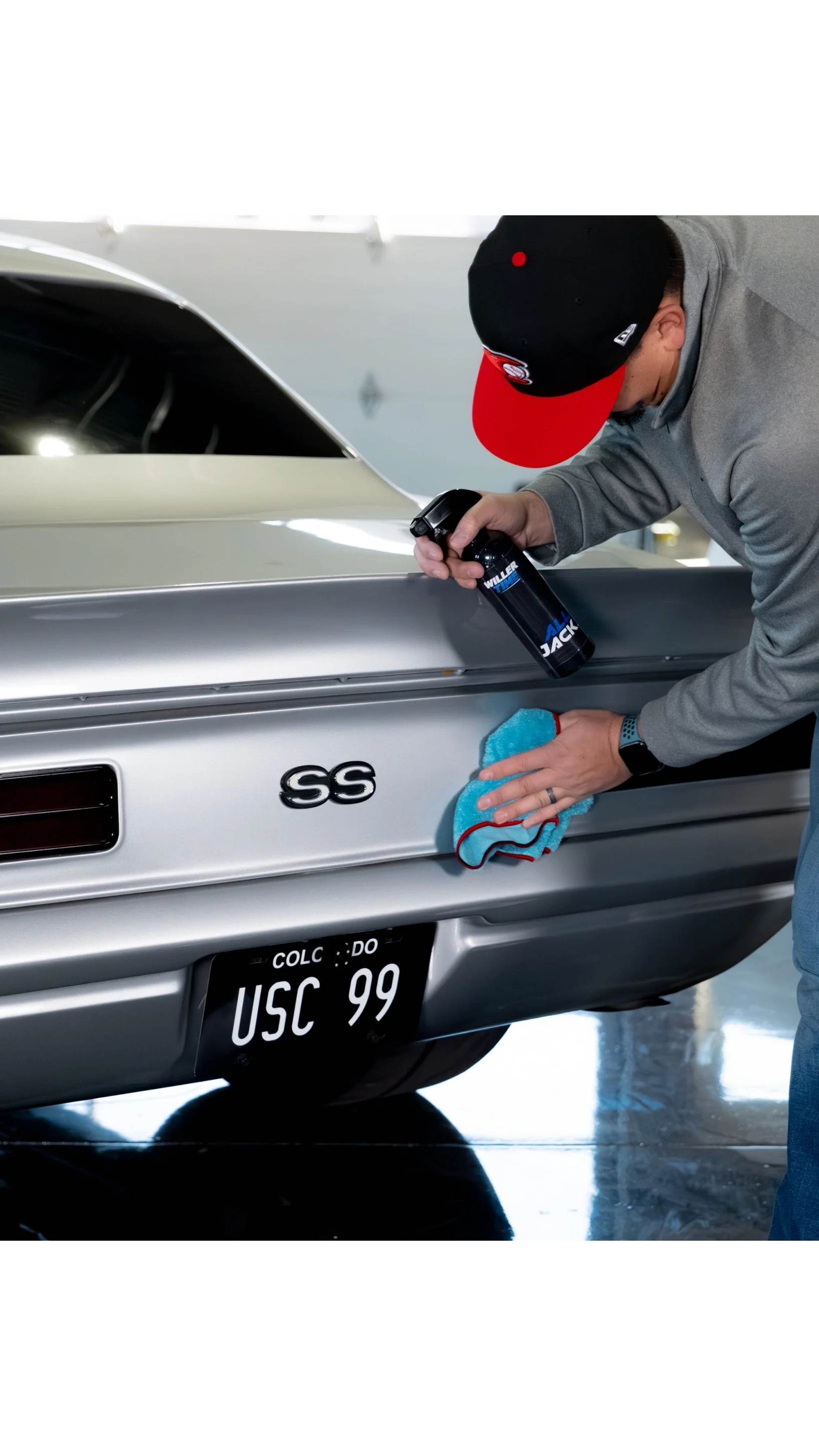
Consistency does more for a car’s finish than any single heavy application ever will. Guidance for weekly-use detail sprays recommends applying the product weekly for daily drivers, or after every wash for anyone chasing that “just detailed” look between full details. To avoid streaking, the guidance is straightforward: apply to a cool surface, use a clean microfiber towel, and buff dry rather than letting the product sit and flash on its own. A two-towel method, one for the initial wipe and a second dry one for the final buff, tends to produce the deepest, most showroom-ready result.
Dye-Free Hybrid Wax Wins on Shine and Protection
Weighing the options side by side makes the case for dye-free hybrid wax fairly clear. Natural carnauba wax delivers stunning depth of color but fades within weeks. Pure synthetic wax lasts far longer but can look flatter and less rich on the surface. Dye-free hybrid wax borrows the best of both, adding ceramic-style additives for a bonded, hydrophobic layer that can last a year or more, all while skipping the pigment that causes haze and streaking in the first place.
For everyday drivers and dedicated enthusiasts alike, that combination translates into fewer full detailing sessions, a paint job that holds its “just washed” look longer, and a finish that photographs well under any lighting. That combination of ceramic-style bonding and dye-free clarity makes hybrid wax a practical default choice for anyone serious about protecting their car’s shine. For a simple way to put these principles into practice, consider a dye-free hybrid detail spray built around a short, transparent ingredient list rather than a proprietary blend.
Willer Time
support@willertime.com
1(800) 555-1234
2020 N Academy Blvd Ste 261
#4504
Colorado Springs
CO
80909
United States


