
Sophia Space and Caltech secure U.S. Patent for Space-Based Data Centers, Deepen R&D Program
PR Newswire
PASADENA, Calif., July 30, 2026
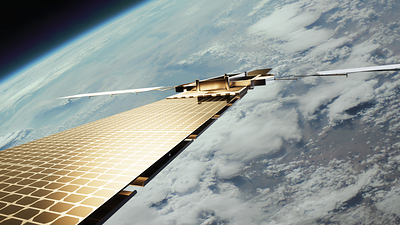
PASADENA, Calif., July 30, 2026 /PRNewswire/ — Sophia Space Inc., a portfolio company of Mandala Space Ventures, today announced the issuance of U.S. Patent No. 12,679,564, titled Space-Based Data Centers, which is jointly owned by Sophia Space and Caltech. The patent—filed in October 2024 and issued on July 14, 2026—covers architectures for the implementation of large-scale, modular data centers in space. The architecture uses free energy from the Sun to power onboard computers and data storage designed specifically to operate in a space environment, while passively radiating heat into deep space. The invention emerged from an internal research and development program within JPL, which is managed by Caltech, designed to support the exploration of high-risk, high-reward concepts outside of JPL’s active mission portfolio.
The patent names seven inventors, drawing on expertise from JPL, Caltech, and Sophia Space: Dr. John R. Brophy (JPL), Dr. Leon Alkalai (Sophia Space), Prof. Sergio Pellegrino (Caltech), Dr. Jonathan Sauder (JPL), Timothy P. McElrath (JPL), Dr. Douglas J. Sheldon (JPL), and Don J. Hunter. Dr. Alkalai, a longtime JPL Fellow, founded Sophia Space to commercialize the invention in June 2023 as a portfolio company of Mandala Space Ventures, a Pasadena-based venture studio focused on the emerging orbital economy.
“This patent reflects a different way of thinking about computer infrastructure in space,” said Dr. Alkalai, Founder and CTO of Sophia Space. “You can’t simply take a terrestrial data center and move it into space. Building data centers in space requires a fresh look at the energy life-cycle problem. Cooling in space is not simple. The only way to cool the data center in space is by radiating waste heat into deep space. Our work invented the ‘TILE’ architecture, a modular, scalable, passively-cooled, computing and data storage unit that can be assembled into a large-scale computing data center surface in space that is constantly powered by solar energy and constantly radiates into deep space.”
Dr. Alkalai added that “this effort builds on pioneering work previously developed at Caltech by the Space Solar Power Project that was funded by a generous donation by the Donald and Brigitte Bren Foundation in 2013.” Caltech’s Space Solar Power Project, a collaborative research effort led by three Caltech faculty, which included Prof. Pellegrino, successfully demonstrated for the first time in 2023 the project’s ability to collect and complete the directed, wireless transmission of power from space to Earth.
That work led to a different application.
“Instead of beaming down energy to Earth from orbit, we decided to consider putting computing in space and beam down data,” Dr. Alkalai noted. “The key technical problem to solve was in the area of cooling in space, which is a very tough problem to solve.”
For Dr. John Brophy, a researcher at JPL, the project represents a direct line from federally funded research to commercialized intellectual property.
“The space-based data center architecture described in this patent was developed as part of JPL’s Mission to address challenges of national significance by applying unique JPL talent,” said Dr. Brophy. “This is an illustration of how JPL, Caltech and private industry can work together to rapidly develop solutions to difficult technical problems for the benefit of the nation.”
Alongside the patent announcement, Sophia Space is expanding its R&D investment, which includes a new sponsored research agreement with Caltech to support continued development of thermal and structural technologies for orbiting data center architecture. With Caltech’s Prof. Pellegrino, Sophia Space is continuing to research new techniques to scale modular architectures in space using large-scale deployable structures. Under the agreement, Caltech will research and develop light-weight, large-scale deployable structures and thermal management techniques applicable to future Sophia Space orbiting data centers.
As demand for on-orbit computing grows — driven by the proliferation of satellite constellations, AI inference at the edge, national security applications, and the broader commercialization of low Earth orbit — the ability to process data in space, rather than downlinking it for ground-based handling, becomes a decisive enabling capability. Sophia Space intends to further develop the fundamental architectural solutions that make that possible.
Organizations in aerospace and defense, enterprise, and commercial space with interest in on-orbit computing capabilities can learn more and engage with Sophia Space at sophia.space.
About Sophia Space: Sophia Space is an orbital space computing company headquartered in Pasadena, California. The company is developing TILE modular compute platforms designed to bring AI inference and data processing directly to low Earth orbit. Sophia Space’s technology enables satellites and space platforms to process data where it is generated, reducing latency, bandwidth demands, and dependency on ground-based infrastructure. With $22 million in total funding and a 2027 on-orbit demonstration planned aboard an Apex Nova satellite bus, Sophia Space is building the intelligent infrastructure layer for the next era of space operations.
 View original content to download multimedia:https://www.prnewswire.com/news-releases/sophia-space-and-caltech-secure-us-patent-for-space-based-data-centers-deepen-rd-program-302838499.html
SOURCE Sophia Space


